
بقلم Ziyara.io آخر تحديث 8 أكتوبر 2026
في هذه الصفحة
إذا كنت تدير شركة أو وكالة للعمرة والحج، فغالبًا يبدو "نظامك التقني" هكذا: ملف Excel ضخم، ومجموعة واتساب لكل رحلة، وصور جوازات مبعثرة على ثلاثة هواتف، ودفتر تُسجَّل فيه الدفعات حين يتذكر أحدهم.
وهو يعمل — إلى أن تتجاوز المجموعة 30 معتمرًا، أو تتداخل رحلة ثانية مع الأولى، أو تطلب شركة الطيران قائمة ركاب مصحّحة ليلة الإقلاع.
في هذا الدليل: ما الذي يجب أن يفعله برنامج شركات السياحة لمجموعات العمرة والحج فعلًا، ولماذا تعجز البرامج السياحية العامة، وكيف تختبر أي منصة اختبارًا جادًا في ظهيرة واحدة.
تفتتح وكالة جديدة؟ يغطي دليل كيف تؤسس وكالة عمرة الخطوات التي تسبق اختيار البرنامج.
لماذا تفشل البرامج السياحية العامة مع وكالات العمرة
معظم "برامج وكالات السفر" مبنية لبيع رحلات فردية: عميل، حجز، رسالة تأكيد. أما تنظيم مجموعات العمرة فعملٌ مختلف:
- أنت تدير مجموعات لا حجوزات. من أربعين إلى مئتي شخص يسافرون في التواريخ نفسها، بفنادق مشتركة وحافلات مشتركة وقائمة ركاب واحدة لكل رحلة طيران.
- لتوزيع الغرف قواعده. الغرف لجنس واحد، والعائلات تريد البقاء معًا، ولكل نوع غرفة (رباعية، ثلاثية، ثنائية) سعر مختلف.
- الوثائق هي جوهر العمل. جوازات بصلاحية ستة أشهر، وملفات تأشيرات بالصيغة التي تتوقعها الأنظمة السعودية بالضبط، وقوائم ركاب بصيغة كل ناقل.
- المعتمرون يدفعون أقساطًا. عربون عند التسجيل، ودفعات على مدى شهور، ورصيد أخير قبل المغادرة — وكثير منه نقدًا.
نظام CRM العام لا يعرف شيئًا من هذا كله. وستجد نفسك تعيد بناء جداول Excel داخل أداة أغلى ثمنًا. ويقارن دليل CRM شركات السياحة أم برنامج مجموعات العمرة الفئات العامة مهمةً مهمة.
القدرات العشر التي تهم فعلًا
عند مقارنة المنصات، تجاهل تسويق «عدد الميزات» وافحص هذه النقاط العشر. قد لا تحتاج وكالتك إلى كل واحدة، لكن على كل مورّد أن يبيّن ما هو مدمج، وما يحتاج أداة أخرى، وما لا يدعمه.
| القدرة | ما الذي تبحث عنه |
|---|---|
| ملفات المعتمرين | سجل واحد لكل معتمر: بيانات الجواز والوثائق وسجل الدفعات والمجموعة — مشفَّر، لا في مجلد مشترك. واسأل هل تُقرأ بيانات الجواز من سطرَي الرمز بدل كتابتها |
| المجموعات والباقات والعملاء المحتملون | رحلات بحالات وفئات سعر حسب الغرفة، ومسار للاستفسارات إن كنت تتابع العميل قبل أن يصبح معتمرًا |
| التسجيل الذاتي | رابط مناسب للجوال بلغات معتمريك، مع رفع الوثائق وكشف التكرار ومرحلة موافقة |
| الفنادق والغرف والحصص | مكة والمدينة، وعدّ أسرّة حي، وقواعد العائلة والجنس، وتصدير للفندق — وتتبع الحصص ومواعيد تحريرها إن كنت تتعاقد على مخزون غرف |
| الطيران وقوائم الركاب | الذهاب والعودة والمقاعد وقوائم مولّدة من بيانات معتمدة. اسأل عن نماذج الناقلات ومن يحدّثها |
| الدفعات والمصروفات والربح | أقساط وإيصالات ومتأخرات ومصروفات المجموعة وربحها الحقيقي |
| التواصل والعمل الميداني | إشعارات وبريد أو رسائل عند الحاجة، واستخدام جيد من الهاتف، ومعلومة مباشرة للمرشد والمعتمر |
| الأمان والمساءلة | تشفير وُعزل الوكالات والصلاحيات وسجل النشاط والنسخ الاحتياطي ومكان الاستضافة واتفاقية معالجة البيانات |
| النقل وملكية البيانات | استيراد Excel مجرّب، ومعالجة التكرار، وتصدير كامل، وجواب واضح عن مساعدة النقل وتكلفتها وموعدها |
| الحدود والتكاملات | قائمة صريحة بالربط المباشر مع نسك أو GDS أو المحاسبة أو واتساب أو الدفع، وعبارة «غير مدعوم» حين لا يوجد ربط |
صنّف كل بند إلى ضروري، مفيد، أو غير مطلوب قبل مخاطبة المورّدين. منصة أصغر تغطي كل الضروريات أفضل من قائمة طويلة تفوّت عملًا يؤديه فريقك يوميًا.
أربعة أنواع من الأدوات، جنبًا إلى جنب
| Excel + واتساب | CRM سياحي عام | بوابة تُطوَّر خصيصًا | منصة SaaS متخصصة | |
|---|---|---|---|---|
| تكلفة البداية | "مجاني" | 50–200 €/شهر | 5,000–30,000 € مقدمًا | اشتراك |
| الوقت حتى أول مجموعة | الآن (هكذا تعمل أصلًا) | أسابيع من الإعداد | 3–6 أشهر | أيام |
| الغرف وقوائم الركاب | يدوي ومعرّض للخطأ | غير موجودة | إن كتبتها في المواصفات | مدمجة |
| التحديثات والميزات | أنت | المطوّر (ميزات عامة) | طلبات تغيير مدفوعة | ضمن الاشتراك |
| المخاطرة | أخطاء وإرهاق | لا يناسب العمل | تجاوز الميزانية والمواعيد | اختيار المورّد |
Excel ليس مجانيًا في الحقيقة — فصّلنا كلفته الحقيقية في توقفوا عن إدارة مجموعات العمرة في Excel. وإن عرضت عليك شركة برمجة بوابة خاصة، فاقرأ منصة جاهزة أم تطوير خاص قبل التوقيع.
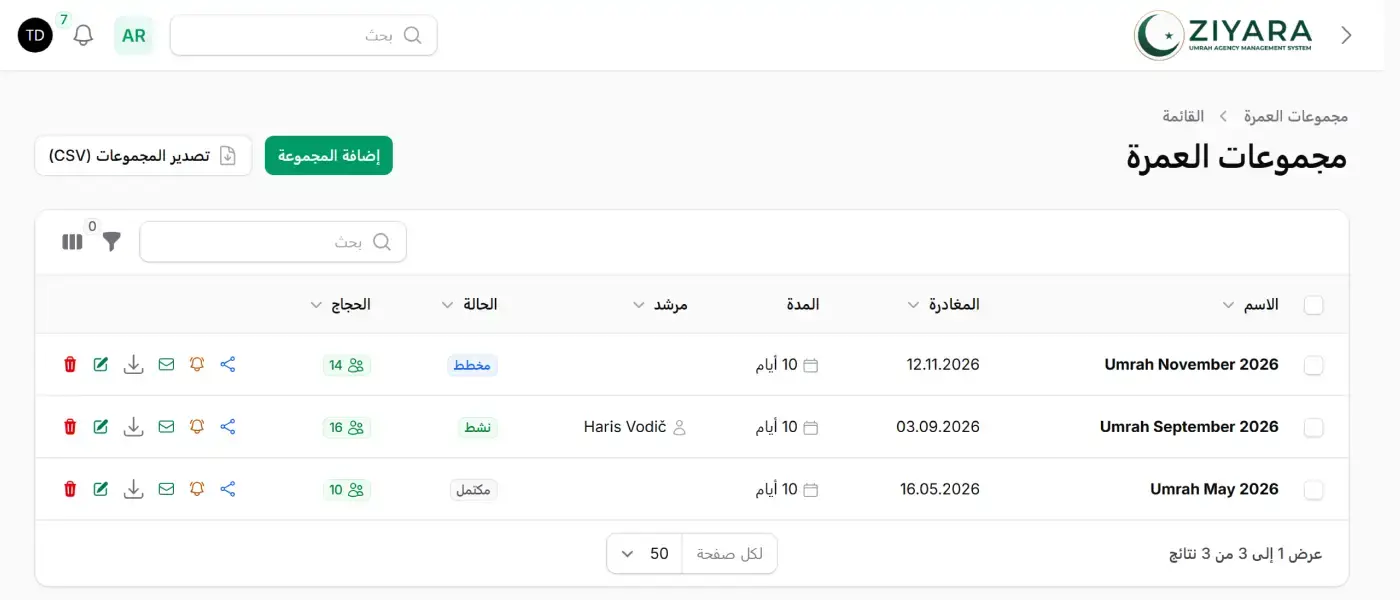
شاهد كيف تنتقل مجموعة البيانات نفسها عبر العملية
تغذي سجلات المعتمرين المعتمدة توزيع الغرف وتجهيز الرحلات من دون إعادة الكتابة.
-

1. استيراد المعتمرين
استورد قائمتك الحالية واعتمد ملفات المعتمرين المكتملة.
-
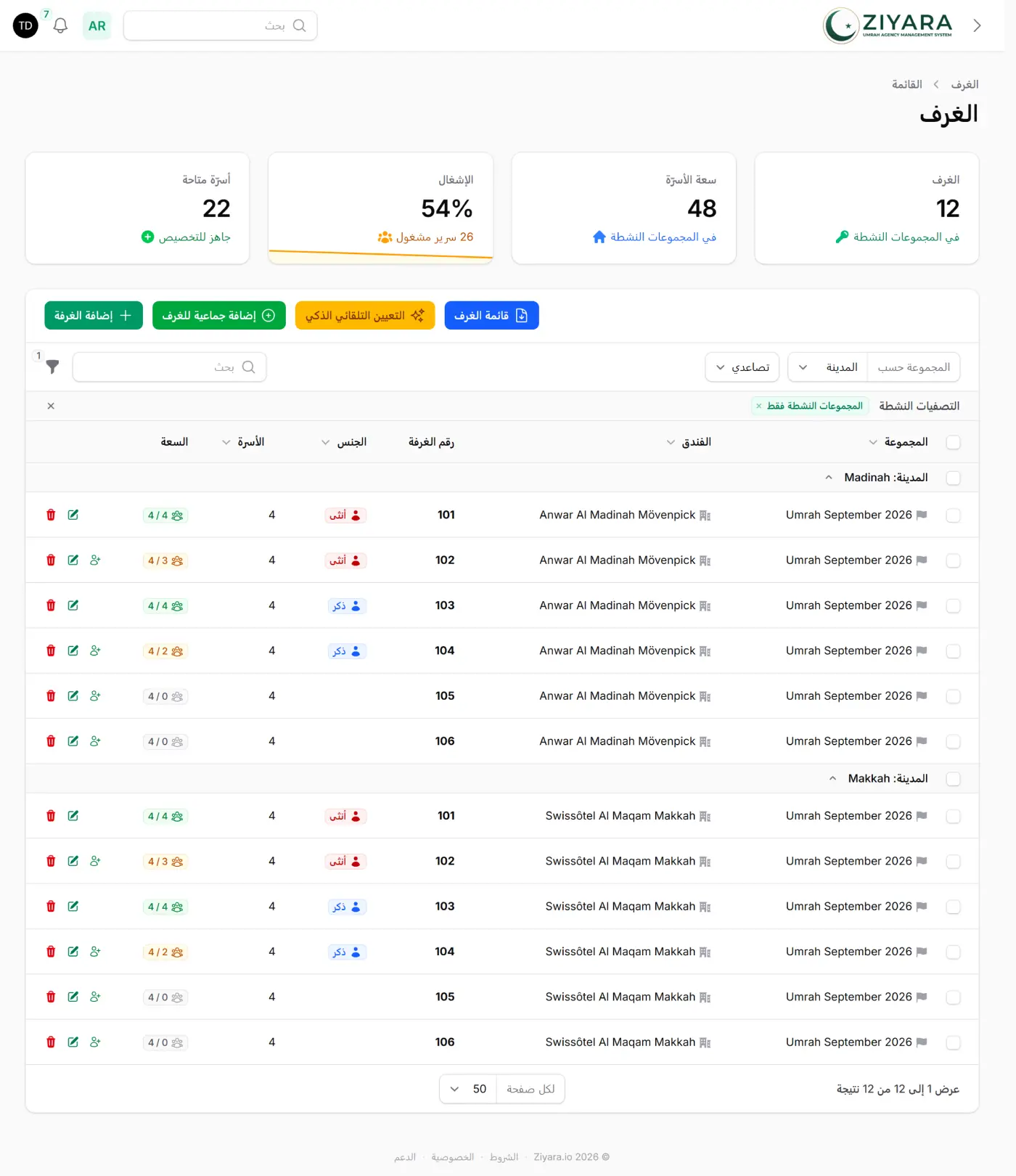
2. توزيع الغرف
استخدم الملفات نفسها لغرف مكة والمدينة مع عدد الأسرّة المتاح لحظيًا.
-

3. تجهيز الرحلات
أنشئ قوائم الرحلات والكشوف من السجلات المعتمدة نفسها.
قارن التكلفة الكلية لا رقم الاشتراك وحده
تختلف نماذج التسعير أكثر من أن يفيد متوسط واحد. قارن التكلفة السنوية على عدد معتمريك وموظفيك وطريقة عملك، وضع هذه البنود بجانب كل عرض:
- الاشتراك الأساسي وحدود المعتمرين والمجموعات والفروع
- الموظفون الإضافيون ورسوم الحجز ورصيد الرسائل
- الاستيراد والتهيئة والتدريب
- مدة العقد والإلغاء والسعر بعد الفترة الترويجية
- التخصيصات وطلبات التغيير المدفوعة
- وقت الموظفين الذي يبقى في الجداول لأن مسارًا مطلوبًا غير موجود
اطلب السعر كتابةً واستخدم السيناريو نفسه مع الجميع: عدد المعتمرين السنوي، والمستخدمون والفروع، ومساعدة النقل المطلوبة. تنشر Ziyara أسعار Starter وProfessional الحالية في صفحة الأسعار، لذا فالسعر الذي تختبره هو السعر الذي تستطيع شراءه بلا مكالمة مبيعات.
كيف تختبر أي منصة في ظهيرة واحدة
لا تشاهد العروض التقديمية. افتح حساب تجربة ونفّذ هذه القائمة ببياناتك:
- استورد 20 معتمرًا حقيقيًا من ملف Excel لديك. هل التقط المكررين؟ أين ذهبت أرقام الجوازات، وهل هي مشفّرة؟
- أنشئ رحلة واحدة بباقتين سعريتين (رباعية وثنائية).
- أرسل رابط التسجيل لزميل وليسجّل من هاتفه بلغة سوقكم.
- وزّع الغرف في فندق بمكة وآخر بالمدينة. حاول وضع رجل في غرفة نساء — يجب أن يمنعك النظام.
- ولّد قائمة ركاب وقارنها بما تقبله شركة طيرانك فعلًا.
- سجّل دفعتين لمعتمر واحد وتأكد أن الرصيد المتبقي يتحدّث تلقائيًا.
- اعثر على رقم ربح المجموعة. إن لم تجده بنقرتين، فلن يجده محاسبك أبدًا.
- ادعُ مستخدمًا ثانيًا بصلاحيات محدودة، ثم تحقق مما يستطيع رؤيته وتعديله وتصديره وابحث عن فعله في سجل النشاط.
- صدّر بياناتك. افتح قائمة المعتمرين والغرف وقائمة الطيران خارج المنصة وتأكد أنك تسترد معلوماتك بصيغة مفيدة.
- اسأل عن الحدود: هل يوجد ربط مباشر بنسك أو GDS؟ هل تدير حصص الفنادق؟ ما قنوات التواصل الأصلية؟ اطلب عرض كل «نعم» وتسجيل كل «لا».
ليست النتيجة فائزًا عالميًا، بل المنصة التي تجتاز ضرورياتك من دون أن تنشئ جدولًا ثانيًا بجانبها.
أين تقف Ziyara — وأين لا تقف
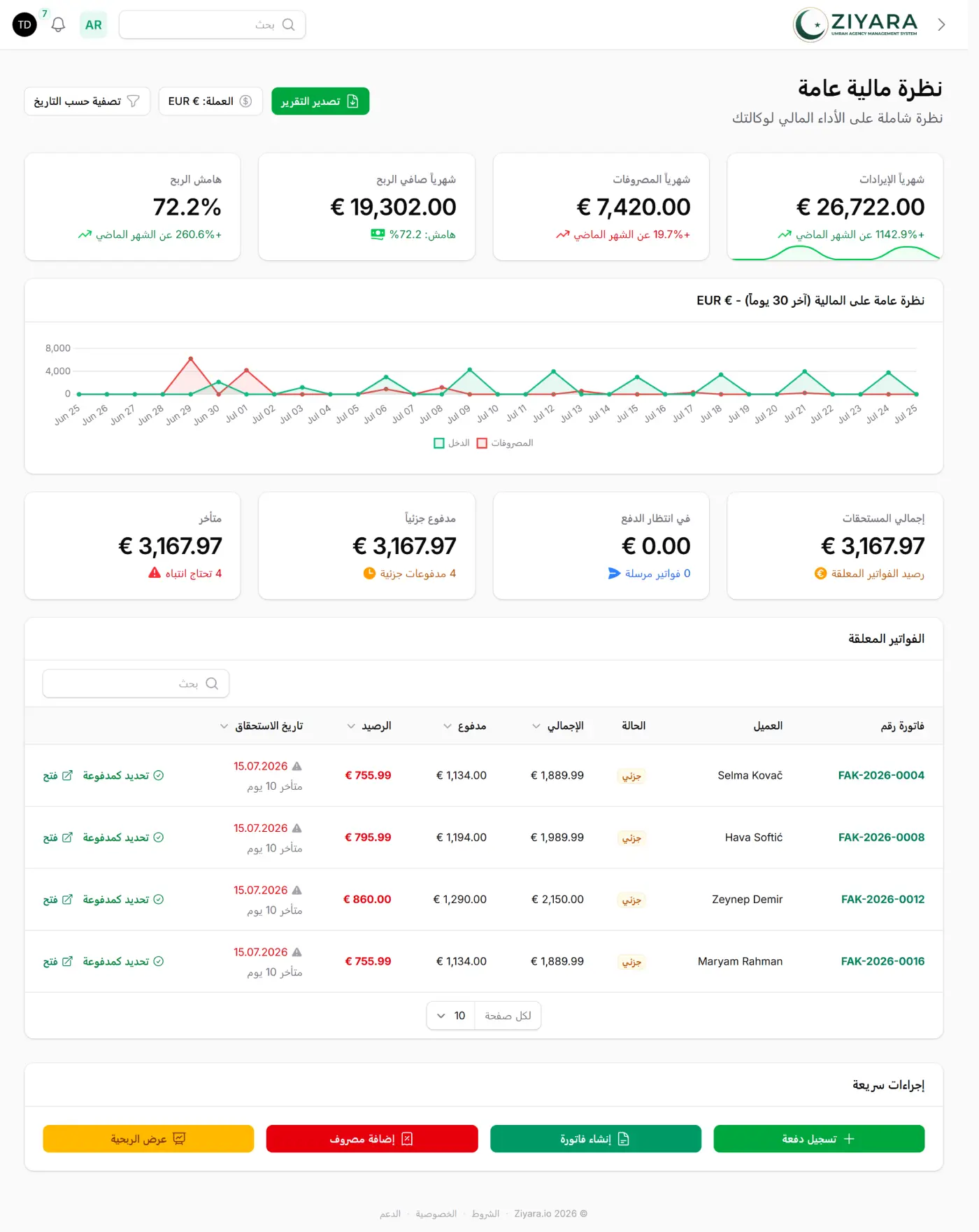
بُنيت Ziyara لهذا الاختبار تحديدًا. منصة B2B لوكالات العمرة والحج: ملفات معتمرين ببيانات جوازات مشفّرة، واستيراد من Excel، وروابط تسجيل بعشر لغات، وتوزيع غرف تلقائي في مكة والمدينة، ونموذج قياسي ونماذج إعداد موجهة للناقلات، وتتبّع أقساط، وربح مباشر لكل مجموعة. أكّد النموذج الحالي مع الناقل قبل التقديم.
كما تشمل كل باقة تطبيقًا جوّالًا للمعتمرين — بطاقة رقمية برمز QR للتحضير، وإشعارات فورية، وزر SOS يرسل موقع المعتمر عبر GPS إلى مرشدكم.
أفضل استخدام: وكالة تشغيلية تنظم مجموعات عمرة أو حج وتريد مصدرًا واحدًا من التسجيل والوثائق إلى الدفعات والغرف والقوائم والربح بعد الرحلة، خصوصًا حين يعمل المكتب والمعتمرون بلغات مختلفة.
ليست كافية وحدها: لوكالة OTA تحتاج مخزون GDS حيًا، أو سوق موردين، أو محرك حجز استهلاكي بعلامة بيضاء، أو تقديمًا مباشرًا إلى نسك. لا تستبدل Ziyara نسك أو المشغل السعودي ولا تتصل بهما مباشرة؛ بل تجهّز البيانات والوثائق المعتمدة للنموذج الذي يطلبانه. وإن كان مخزون الفنادق المباشر أو صندوق واتساب مشتركًا ضرورة، فاستخدم أداة متخصصة معها أو اختر منصة تعرض ذلك الربط فعليًا.
الأسعار معلنة في صفحة الأسعار، والتجربة المجانية لمدة 30 يومًا لا تطلب بطاقة — وتكفي لتنفيذ القائمة كاملة مع 20 من معتمريك قبل أن تقرر.
خطة انتقال قليلة المخاطر
- اختر فترة هادئة بين رحلتين؛ لا تبدّل النظام في الأسبوع الأخير قبل الطيران.
- نظّف جدولًا نشطًا واحدًا: احذف التكرار، ووحّد التواريخ، وحدد السجل المرجعي.
- استورد مجموعة واحدة لا التاريخ كله. نفّذ الاختبارات العشرة، وطابق الأعداد والأرصدة، ودع الموظف الذي يبني الغرف والقوائم يعتمد النتيجة.
- حدد تاريخ التحويل. بعده تصبح المنصة الجديدة مصدر الحقيقة ويصبح الجدول القديم للقراءة فقط. انقل التاريخ القديم بعد استقرار العمل النشط.
صدّر مجموعة الاختبار قبل الالتزام؛ فالانتقال آمن فقط حين يعمل الدخول والخروج.
الأسئلة الشائعة
ما أفضل برنامج لوكالات العمرة؟
البرنامج الذي يجتاز ضرورياتك من قائمة النقاط العشر على بيانات مجموعة حقيقية واحدة. لمعظم الوكالات يشمل ذلك الملفات والمجموعات والتسجيل والغرف والقوائم والمدفوعات والربح والأمان والتصدير المفيد وخطة النقل. جرّبه بمعتمريك قبل القرار.
هل يوجد برنامج لشركات السياحة مصمَّم لمجموعات العمرة والحج؟
نعم. وهو فئة صغيرة قائمة بذاتها: برنامج مجموعات مبنيّ حول الرحلة، فيه توزيع غرف لجنس واحد في فنادق مكة والمدينة، وبيانات الجوازات والتأشيرات، وقوائم ركاب الطيران، وأقساط لكل معتمر. أما برامج شركات السياحة العامة وأنظمة CRM السياحية فمبنية حول عميل واحد وحجز واحد؛ وتبيّن مقارنتنا بين النوعين أين يناسب كلٌّ منهما.
كم يكلف برنامج وكالات العمرة؟
لا يوجد سعر عالمي مفيد؛ فالمورّدون يحاسبون حسب الوكالة أو المستخدم أو المعتمر أو الحجز أو الفرع، وتضيف البوابات الخاصة تكلفة البناء والصيانة. قارن الإجمالي السنوي لحجمك، بما فيه التهيئة والرسائل والمستخدمون الإضافيون وما يبقى يدويًا.
هل توجد برامج لمجموعات الحج أيضًا؟
نعم. قوائم المعتمرين والتسكين والوثائق والمدفوعات وقوائم الركاب تعمل بالطريقة نفسها في الحج؛ أما الحصص والتصاريح ولوجستيات المشاعر فتتم عبر قنوات الحج الرسمية. يوضح دليل إدارة مجموعات الحج كيف يتكامل الجانبان.
هل يمكنني تجربة برنامج العمرة قبل الشراء؟
ابحث عن تجربة مجانية طويلة بما يكفي لإعداد مجموعة حقيقية — عدة أسابيع على الأقل — ولا تطلب بطاقة ائتمان، لتطبّق قائمة التقييم أعلاه على بياناتك.
كُتب هذا الدليل وتُرجم بمساعدة أدوات الذكاء الاصطناعي. إذا لاحظت خطأً في المحتوى أو في الترجمة، فراسلنا على info@ziyara.io


