
بقلم Ziyara.io آخر تحديث 13 أكتوبر 2026
في هذه الصفحة
سؤال جردٍ محرج لأي وكالة عمرة أوروبية: كم جوازًا من جوازات معتمريكم موجود الآن صورًا في محادثات واتساب لدى الموظفين، وفي معارض هواتف خاصة، وفي نسخ سحابية احتياطية؟
جواب أغلب الوكالات الصادق: "كلها." وكل واحدة منها نسخة من أكثر وثيقة يملكها الإنسان عرضةً لسرقة الهوية — على هواتف خاصة، خارج أي رقابة، وإلى الأبد؛ لأن نسخ المحادثات الاحتياطية لا تنتهي صلاحيتها.
وليست هذه فوضى فحسب؛ بل انكشاف قانوني في الاتحاد الأوروبي. بيانات الجوازات بيانات شخصية بموجب GDPR، وأنتم (الوكالة) المتحكم بالمعالجة — و"كنا نحفظها في واتساب" ليست ترتيبًا يمكن الدفاع عنه.
ما الذي يجب جمعه لكل معتمر
طقم وثائق رحلة العمرة معياري:
- الجواز — بصلاحية توافق شرط الدخول السعودي (نحو ستة أشهر بعد السفر؛ تحققوا من الشروط السارية لكل رحلة)
- صورة شخصية حيث تطلبها معالجة التأشيرة
- شهادات التطعيم حين تُشترط
- وثائق التأشيرة عند صدورها
- عقد/شروط موقّعة، ولوكالات الاتحاد الأوروبي إشعار/موافقة على معالجة البيانات ذاتها
الجمع نصف المهمة الأسهل. الالتزامات تتعلق بما يأتي بعده.
ما الذي يطلبه GDPR من الوكالة فعلًا
لا تحتاجون شهادة قانون — الواجبات العملية تُختصر في خمسة:
- أساس قانوني وشفافية. ينبغي أن يعرف المعتمرون ماذا تجمعون ولماذا (تنفيذ عقدهم: تأشيرات، طيران، فنادق).
- تقليل البيانات. اجمعوا ما تتطلبه الرحلة — لا أكثر.
- الأمان. البيانات الشخصية تُحمى — تشفير وضبط وصول. مجلد مشترك بصور JPEG للجوازات، أو سلسلة محادثة، يسقطان من أول نظرة.
- ضبط الوصول. ليس كل من يساعد في المجموعة بحاجة لرؤية أرقام الجوازات وسجلات الدفع.
- حدود الاحتفاظ. بعد الرحلة والمدد القانونية تُحذف البيانات — لا تُؤرشف أبدًا في نسخ احتياطية لا تعرفون حتى مكانها.
حادثة واحدة — هاتف مفقود، حساب مخترق — تعني انكشافًا رقابيًا وضربًا لثقة الجالية، وهذا تحديدًا ما يقتل الوكالات.
جمعٌ لا يسرّب
الحل يوازي مسار التسجيل: ألا تمر الوثائق عبر المحادثات إطلاقًا.
- يقدّم المعتمرون بياناتهم ويرفعون وثائقهم عبر رابط التسجيل إلى ملفهم مباشرة — لا عبر هاتف موظف الخاص أبدًا.
- يُلتقط المكرر عند الدخول (الجواز نفسه لا يسجَّل مرتين).
- يقارن الموظف المُدخل بالمسح مرة واحدة عند الاعتماد — وهي آخر مرة تلمس فيها يدٌ بشرية الوثيقة الخام.
من تلك اللحظة، كل استخدام للبيانات — قوائم الركاب، ملفات التأشيرات، التسكين — تصديرٌ مولَّد من السجل الواحد المحفوظ، لا نسخة إضافية تدور في الأرجاء.
تتبّع الصلاحية: التقط المشكلة قبل ستة أشهر
أغلى مشكلات الوثائق جوازٌ تنتهي صلاحيته بعد السفر بأربعة أشهر — يُكتشف عند تقديم التأشيرة أو في المطار. أيًا كان ما يحفظ بيانات معتمريكم، فعليه فحص تواريخ الصلاحية عند التسجيل، حين يكلف الإصلاح رسم تجديد لا إعادة حجز. اجعلوا "الصلاحية مقابل تاريخ المغادرة" عمودًا ثابتًا في مراجعة الاستقبال — أو استخدموا برنامجًا يعلّمه عنكم.
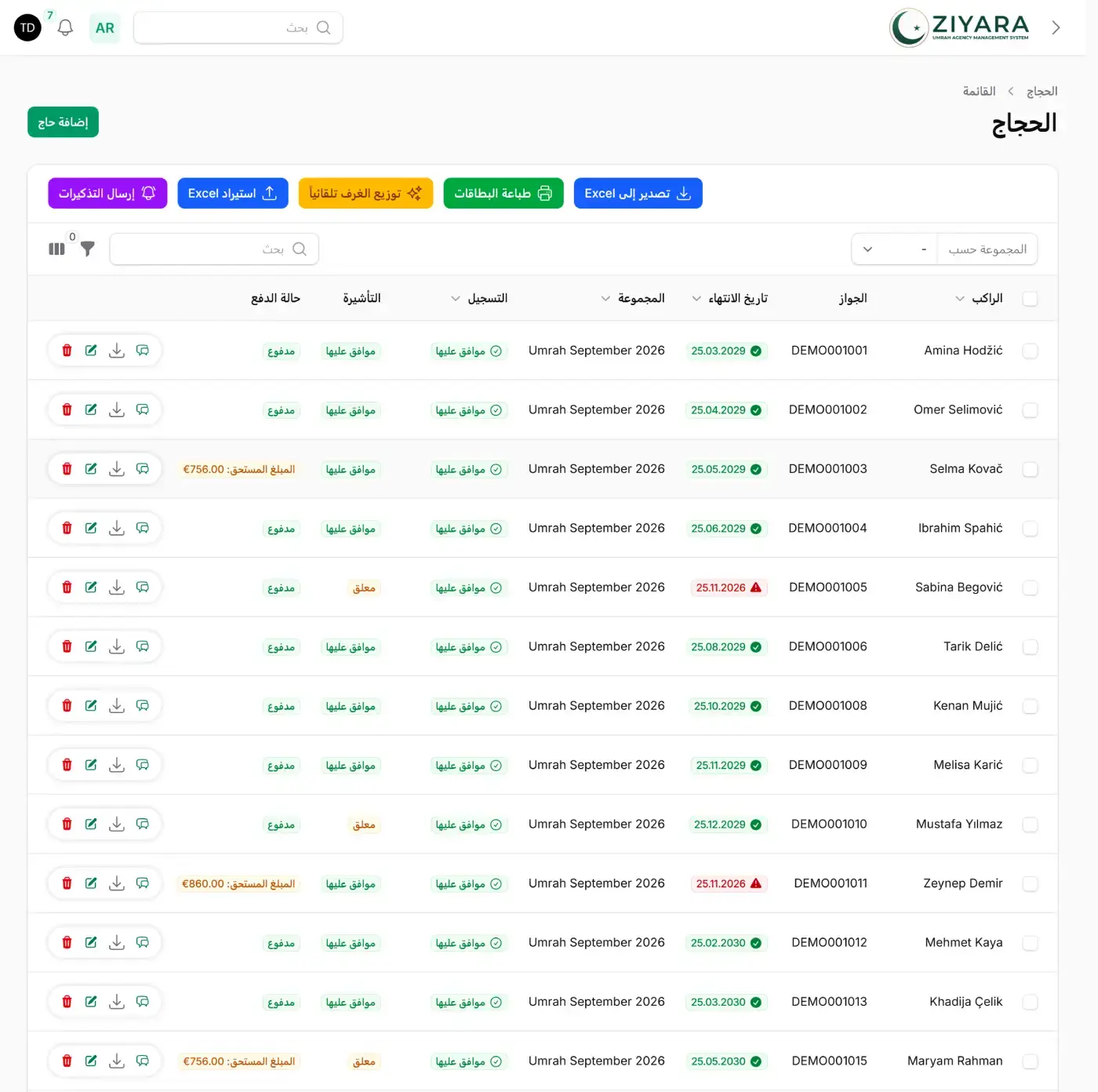
تقارن بين الأنظمة؟ قائمتنا لما يجب أن يقدمه برنامج وكالات العمرة والحج تتناول هذا إلى جانب بقية الأساسيات. تجمع البيانات في جدول حاليًا؟ قالب قائمة المعتمرين المجاني يضم أعمدة الجواز التي تحتاجها، ويُستورد لاحقًا إلى Ziyara مباشرة.
كيف تفعلها Ziyara
بُنيت Ziyara على هذا النموذج تحديدًا: لكل معتمر ملف واحد يضم بياناته الشخصية ومسوحات جوازه ووثائقه — مع تشفير أرقام الجوازات والهويات في قاعدة البيانات، واستضافة في الاتحاد الأوروبي، ونسخ احتياطية مشفّرة تلقائية. روابط التسجيل تجمع الوثائق من المعتمرين مباشرة بعشر لغات؛ والمكرر يُكشف تلقائيًا. وحين يُدخل الموظف البيانات بنفسه، يملأ زر قراءة جواز السفر الاسم ورقم الجواز والتواريخ والجنس والجنسية من صورة لسطرَي الرمز أسفل صفحة الجواز. تُقرأ الصورة في المتصفح ولا تُرفع إلى أي مكان، ويُتحقق من أرقام التحقق قبل تعبئة أي حقل.
الوصول مضبوط: أعضاء الفريق ينالون أدوارًا، وفي باقة Professional تحدّد أيضًا ما يراه كل عضو — فيدير المساعد المعتمرين دون اطلاع على المالية — وسجل النشاط يدوّن من فعل ماذا. والمستندات المولَّدة — قوائم الركاب وتصديرات التأشيرات والعقود والإيصالات — تُنتَج من الملف عند الطلب، فلا تحتاج صورة الجواز أن تغادر النظام في محادثة بعد اليوم.
إن كانت "إدارتكم للوثائق" اليوم معرضَ صور هاتف، فإن التجربة المجانية طريق هيّن لنقل وثائق مجموعة واحدة إلى مكان يمكنكم تحمّل مسؤوليته — ولمس الفرق.
الأسئلة الشائعة
كم يحق للوكالة الاحتفاظ ببيانات جوازات المعتمرين؟
فقط بقدر ما تحتاجه للرحلة وللالتزامات القانونية للحفظ التي تنطبق عليك، مثل قواعد المحاسبة أو الرحلات الشاملة في دولتك. حدّد المدة في إشعار الخصوصية وطبّقها على الملفات المصدّرة والنسخ الاحتياطية أيضًا.
هل يجوز جمع نسخ الجوازات عبر WhatsApp؟
لا تحظر GDPR تطبيقًا بعينه، لكنها تشترط أمانًا مناسبًا وتحكمًا في مكان انتهاء البيانات الشخصية — وصور الجوازات المتناثرة في محادثات الموظفين ونسخ الهواتف الاحتياطية لا تحقق ذلك عمليًا. رابط التسجيل الذي يرفع الوثيقة مباشرة إلى ملف محمي هو الخيار الذي يمكن الدفاع عنه.
ما الصورة التي يحتاجها المعتمرون للتأشيرة السعودية؟
صورة ملونة حديثة على خلفية بيضاء سادة. ويحدد بوابة التأشيرات أيضًا حجم الملف — حاليًا بين 5 و100 كيلوبايت — ويرفض الصور التي لا تجتاز فحصه، لذا اطلب الصورة مع الجواز عند التسجيل.
ما الوثائق التي يجب على الوكالة التحقق منها عند التسجيل؟
صلاحية الجواز ستة أشهر على الأقل من الوصول، والاسم كما هو مطبوع تمامًا، وصورة التأشيرة، وشهادة لقاح المكورات السحائية ACWY/ACYWX، وهي إلزامية لكل حاج، وفي العمرة للقادمين من الدول التي تحددها السعودية. تسرد قائمة وثائق العمرة والحج كل وثيقة وتوقيت طلبها.
المصادر
كُتب هذا الدليل وتُرجم بمساعدة أدوات الذكاء الاصطناعي. إذا لاحظت خطأً في المحتوى أو في الترجمة، فراسلنا على info@ziyara.io


