
بقلم Ziyara.io آخر تحديث 12 أكتوبر 2026
في هذه الصفحة
لكل وكالة مجموعة واتساب لكل رحلة — وكلها تعرف كيف تفشل: تنشر موعد المغادرة في التاسعة، وبحلول 9:40 يكون مدفونًا تحت ستين رسالة — أدعية، وأسئلة أُجيبت من قبل، ومقطع مُعاد توجيهه — وفي المطار تُقسم عائلتان أنهما لم تريا الرسالة قط.
واتساب هو مسكن جاليتك، فلا تستطيع (ولا ينبغي أن) تهجره. لكن "مجموعة الدردشة" ليست نظام تواصل: لا تتذكر من عرف ماذا، ولا تستهدف أحدًا، ولا تفصل الإعلانات عن الحديث.
ما الذي يحتاج المعتمرون سماعه، ومتى
التواصل الجماعي قابل للتنبؤ. كل ما سترسله تقريبًا يقع على هذا الخط الزمني:
| المرحلة | الرسائل |
|---|---|
| عند الحجز | التأكيد، جدول السداد، قائمة الوثائق |
| قبل أسابيع | مهل الجوازات/الوثائق ("الصلاحية يجب أن تتجاوز…")، تذكيرات الأقساط |
| الأسبوع الأخير | موعد المغادرة ونقطة التجمع، قواعد الأمتعة، تذكير الرصيد الأخير |
| أثناء الرحلة | مواعيد التجمع اليومية، تغييرات البرنامج، انطلاق الحافلات |
| بعدها | شكر، وطلب انطباعات، ومواعيد الموسم القادم |
ملاحظتان تتبعان ذلك. الأولى: معظم الرسائل بثٌّ — معلومة تسير باتجاه واحد. والثانية: كثير منها موجَّه: تذكير الدفع لمن عليه رصيد فقط، وملاحقة الوثيقة لمن ينقصه المسح فقط. ومجموعة الدردشة المفتوحة لا تجيد أيًّا من الاثنين.
البث والحديث قناتان مختلفتان
الحل الذي يعمل عمليًا هو الفصل:
- الإعلانات عبر قناة بلا ردود — رسائل SMS أو بريد أو إشعارات فورية في تطبيق المعتمرين. يتعلم المعتمرون سريعًا: الرسمي يصل من هنا.
- الحديث يبقى في مجموعة الدردشة، حيث تريده الجالية أصلًا — وحيث لا يضير فوات رسالة.
وتستحق رسائل SMS وقفة خاصة عند مجموعات العمرة: لا تحتاج هاتفًا ذكيًا ولا تطبيقًا ولا باقة إنترنت، وتصل إلى أكبر معتمري المجموعة سنًا، وتخترق فوضى التجوال يوم الوصول أفضل من أي شيء آخر.
المجموعات متعددة اللغات
واقع الجاليات: رحلة واحدة، ثلاث لغات عمل — بوسنية الآباء أو تركيتهم، وألمانية الأبناء أو إنجليزيتهم، وعربية المرشد. إن أرسلت كل إعلان بلغة واحدة، فمن المضمون أن يسيء أحدهم فهم موعد التجمع. احتفظ بقوالب رسائل لكل لغة للإعلانات المتكررة (المهل، لوجستيات المغادرة)، كي لا يتوقف الاتساق على من يكتب ذلك اليوم.
الرسالة الموجهة تغلب المعمَّمة
أثمن الرسائل هي الموجهة — لأنها التي تحمي المال والمواعيد:
- تذكيرات الدفع ← فقط لمن عليه رصيد مفتوح
- ملاحقة الوثائق ← فقط لمن ينقصه مسح الجواز
- معلومات فندق بعينه ← فقط لنزلائه
فعل ذلك من تطبيق دردشة يعني حفظ قوائم "من عليه ماذا" في الرأس. أما من نظام التشغيل — حيث تعيش الأرصدة والوثائق أصلًا — فاختيار المستلمين تلقائي.
تقارن بين الأنظمة؟ قائمتنا لما يجب أن يقدمه برنامج وكالات العمرة والحج تتناول هذا إلى جانب بقية الأساسيات.
كيف تفعلها Ziyara
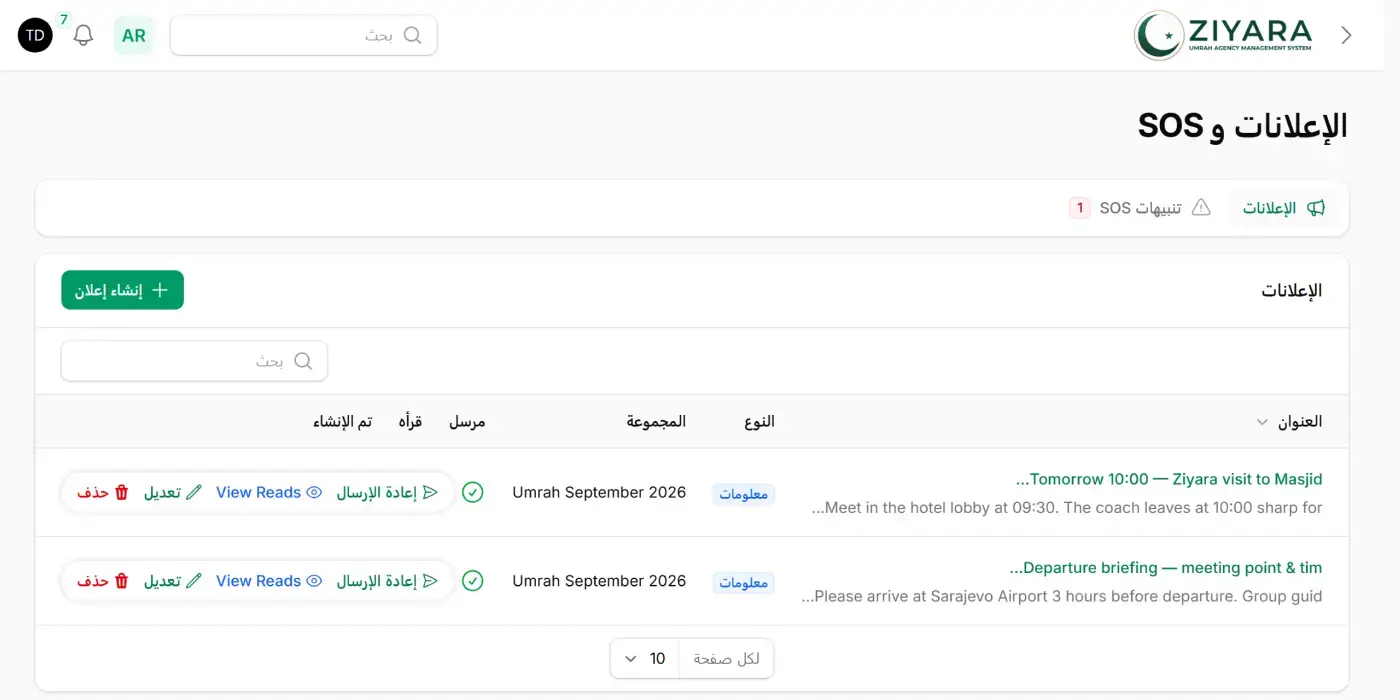
مركز التواصل في Ziyara يرسل حملات SMS وبريد من بيانات معتمريك مباشرة: اختر الجمهور (مجموعة كاملة أو معتمرين مصفّين — مثلًا كل من عليه رصيد)، واختر القناة، واكتب الرسالة أو استخدم قالبًا محفوظًا، وأرسل. والتذكيرات السريعة بالدفعات أو مهل الوثائق تخرج للمختارين بنقرات قليلة.
تعمل الحملات برصيد رسائل — لكل باقة مخصص شهري (50 في Starter و200 في Professional) مع إمكانية الشحن، والرصيد ظاهر في اللوحة. الحملات ميزة Professional وهي ضمن التجربة المجانية. يحصل حساب التجربة على 100 من رصيد الرسائل عند تأكيد بريدك الإلكتروني، وهو ما يكفي لترسل لنفسك SMS أو بريدًا تجريبيًا.
وفي أثناء الرحلة نفسها قناة ثالثة: تصل الإعلانات وتذكيرات البرنامج إشعاراتٍ فورية في تطبيق المعتمرين الجوّال — إلى شاشة القفل مباشرة، دون SMS تجوال.
الأسئلة الشائعة
هل على الوكالات التوقف عن استخدام مجموعات WhatsApp؟
لا. أبقِ المجموعة للحديث والتواصل، لكن أرسل المعلومات الرسمية — المواعيد النهائية وأوقات المغادرة وتغييرات البرنامج — عبر قناة لا تضيع فيها، مثل SMS أو البريد الإلكتروني أو إشعارات التطبيق.
ما أفضل طريقة للوصول إلى المعتمرين كبار السن؟
رسائل SMS. لا تحتاج هاتفًا ذكيًا ولا تطبيقًا ولا باقة إنترنت. أرسل الأساسيات، كموعد المغادرة ومكان التجمع، بلغتهم واطلب من أحد أفراد العائلة التأكد من أنهم رأوها.
متى تُرسل تذكيرات ما قبل السفر؟
مواعيد الوثائق قبل عدة أسابيع، والرصيد المتبقي قبل موعدك مع الموردين، وتفاصيل المغادرة في الأسبوع الأخير — ثم مرة أخرى قبل الرحلة بـ24 إلى 48 ساعة. وتضع قائمة ما قبل سفر مجموعة العمرة كل خطوة في ترتيبها.
كُتب هذا الدليل وتُرجم بمساعدة أدوات الذكاء الاصطناعي. إذا لاحظت خطأً في المحتوى أو في الترجمة، فراسلنا على info@ziyara.io


