
Oleh Ziyara.io Terakhir diperbarui 8 Oktober 2026
Di halaman ini
Jika Anda menjalankan travel umroh atau haji, "sistem" Anda kemungkinan besar seperti ini: satu file Excel raksasa, satu grup WhatsApp per keberangkatan, foto paspor tersebar di tiga ponsel, dan buku catatan tempat pembayaran ditulis kalau ada yang ingat.
Dan itu berjalan — sampai grup melewati 30 jamaah, atau keberangkatan kedua bertabrakan dengan yang pertama, atau maskapai meminta manifes yang dikoreksi semalam sebelum terbang.
Panduan ini membahas: apa yang harus benar-benar dilakukan software travel untuk grup umroh dan haji, mengapa aplikasi wisata umum tidak memadai, dan cara menguji sebuah platform secara serius dalam satu sore.
Baru membuka travel? Panduan cara memulai travel umroh membahas langkah-langkah sebelum memilih software.
Mengapa software travel umum gagal untuk umroh
Sebagian besar "software travel agent" dibuat untuk penjualan perorangan: satu pelanggan, satu pemesanan, satu email konfirmasi. Perjalanan ibadah rombongan adalah bisnis yang berbeda:
- Anda mengelola grup, bukan pemesanan. Empat puluh hingga dua ratus orang berangkat pada tanggal yang sama, dengan hotel bersama, bus bersama, dan satu manifes per penerbangan.
- Pembagian kamar punya aturan. Kamar harus satu jenis kelamin, keluarga ingin bersama, dan setiap tipe kamar (quad, triple, double) harganya berbeda.
- Dokumen adalah inti pekerjaan. Paspor dengan masa berlaku enam bulan, berkas visa dalam format yang persis diminta sistem Saudi, manifes sesuai format maskapai.
- Jamaah membayar dengan cicilan. DP saat mendaftar, pembayaran berbulan-bulan, dan pelunasan sebelum berangkat — sering kali sebagian tunai.
CRM umum tidak mengenal semua itu. Ujung-ujungnya Anda membangun ulang tabel Excel di dalam alat yang lebih mahal. Panduan CRM travel umum vs software grup umroh membandingkan kategori umum itu pekerjaan demi pekerjaan.
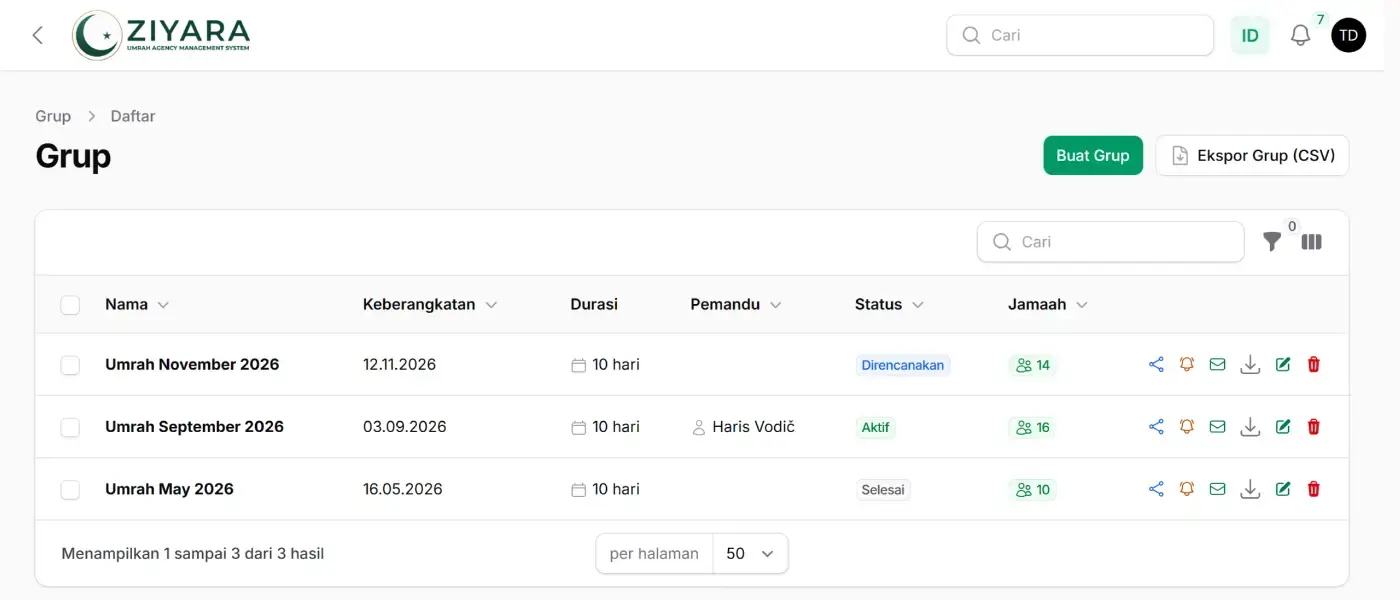
Sepuluh kemampuan yang benar-benar penting
Saat membandingkan platform, abaikan pemasaran jumlah fitur dan periksa sepuluh hal ini. Tidak semua travel memerlukan semuanya, tetapi vendor harus menjelaskan mana yang sudah tersedia, mana yang butuh alat lain, dan mana yang tidak didukung.
| Kemampuan | Yang harus dicari |
|---|---|
| Profil jamaah | Satu catatan per jamaah: data paspor, dokumen, riwayat pembayaran, keanggotaan grup — terenkripsi, bukan di folder bersama. Tanyakan apakah data paspor bisa dibaca dari baris kode paspor, bukan diketik |
| Grup, paket, dan prospek | Keberangkatan dengan status dan harga kamar, serta pipeline pertanyaan bila Anda mengikuti calon jamaah sebelum mendaftar |
| Pendaftaran mandiri | Tautan seluler dalam bahasa jamaah, unggah dokumen, deteksi duplikat, dan tahap persetujuan |
| Hotel, kamar, dan allotment | Makkah dan Madinah, tempat tidur real-time, aturan keluarga dan gender, ekspor hotel — serta tenggat pelepasan bila Anda memegang allotment kamar |
| Penerbangan dan manifes | Pergi-pulang, kursi, dan daftar dari data yang disetujui. Tanyakan format maskapai yang dipelihara |
| Pembayaran, biaya, dan laba | Cicilan, kuitansi, tunggakan, biaya grup, dan laba sebenarnya |
| Komunikasi dan penggunaan lapangan | Pengumuman, email atau SMS bila perlu, penggunaan ponsel yang baik, serta informasi langsung untuk pembimbing dan jamaah |
| Keamanan dan akuntabilitas | Enkripsi, isolasi tenant, peran, log aktivitas, cadangan, lokasi hosting, dan DPA |
| Migrasi dan kepemilikan data | Impor Excel yang diuji, penanganan duplikat, ekspor lengkap, serta jawaban jelas tentang bantuan, biaya, dan waktu migrasi |
| Batasan dan integrasi | Daftar jujur koneksi langsung ke Nusuk, GDS, akuntansi, WhatsApp, atau pembayaran — dan “tidak didukung” bila memang tidak ada |
Tandai setiap poin sebagai wajib, berguna, atau tidak perlu. Platform lebih kecil yang memenuhi semua kewajiban lebih baik daripada daftar panjang yang melewatkan pekerjaan harian tim Anda.
Empat jenis alat, berdampingan
| Excel + WhatsApp | CRM travel umum | Portal pesanan khusus | SaaS khusus umroh | |
|---|---|---|---|---|
| Biaya awal | "Gratis" | 50–200 €/bln | 5.000–30.000 € di muka | Langganan |
| Waktu sampai grup pertama | Sekarang (memang begitu Anda bekerja) | Berminggu-minggu setup | 3–6 bulan | Beberapa hari |
| Kamar & manifes | Manual, rawan salah | Tidak ada | Kalau masuk spesifikasi | Bawaan |
| Pembaruan & fitur baru | Anda sendiri | Vendor (fitur umum) | Permintaan perubahan berbayar | Termasuk |
| Risiko | Kesalahan, kelelahan | Tidak cocok dengan bisnis | Bengkak biaya & molor | Pemilihan vendor |
Excel sebenarnya tidak gratis — hitungan jujurnya ada di Berhenti Mengelola Grup Umroh di Excel. Dan kalau ada software house menawari Anda portal khusus, baca dulu SaaS Siap Pakai vs Pengembangan Khusus sebelum tanda tangan.
Lihat satu set data mengalir sepanjang operasional
Data jamaah yang sama digunakan untuk kamar dan persiapan penerbangan tanpa mengetik ulang.
-

1. Impor jamaah
Masukkan daftar yang ada dan setujui profil jamaah yang lengkap.
-
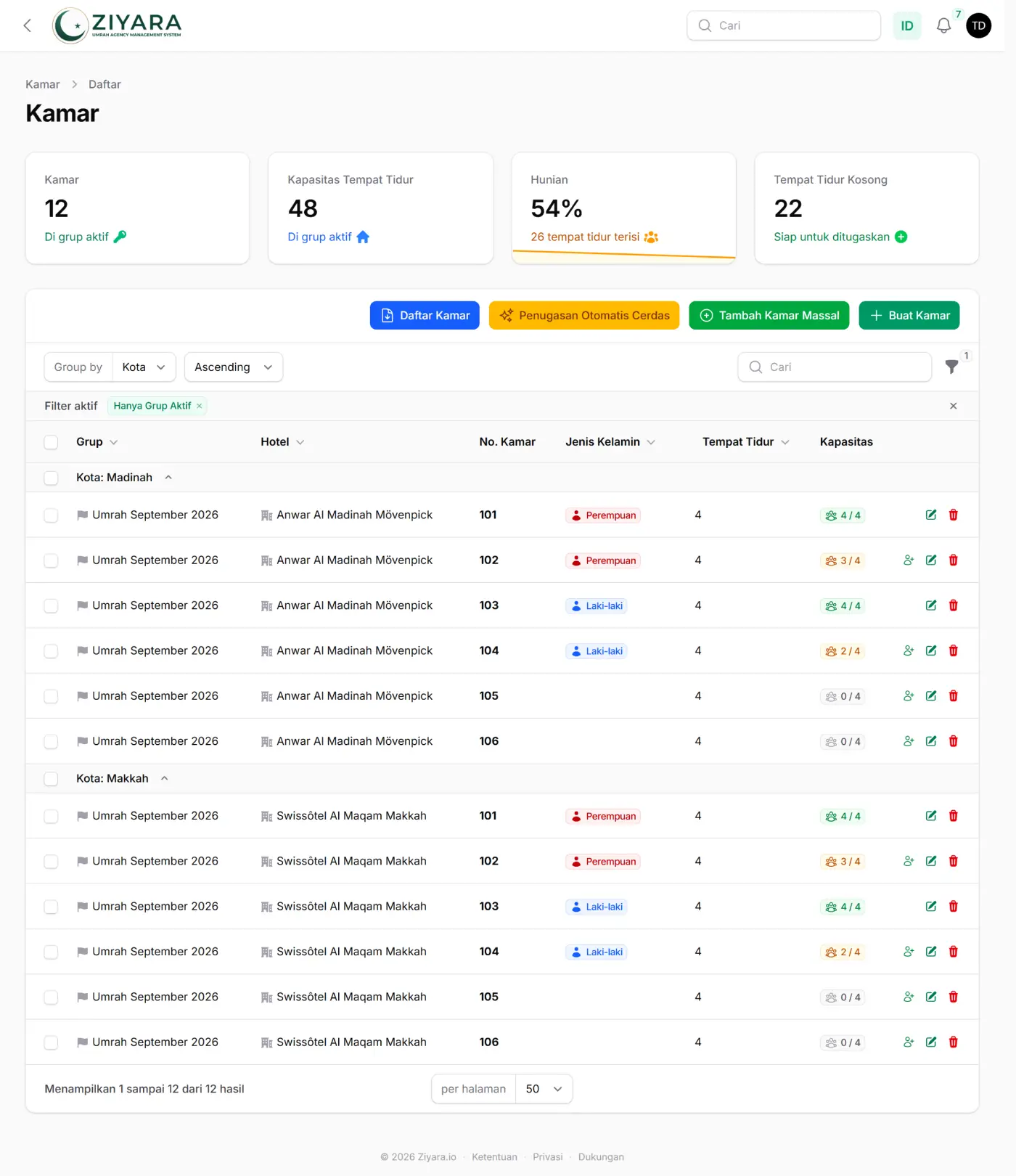
2. Atur kamar
Gunakan profil yang sama untuk kamar Makkah dan Madinah dengan jumlah ranjang terkini.
-

3. Siapkan penerbangan
Buat daftar penerbangan dan manifes dari data yang sama.
Bandingkan biaya total, bukan satu angka bulanan
Model harga terlalu beragam untuk diringkas menjadi satu rata-rata. Bandingkan biaya tahunan untuk volume, tim, dan alur kerja Anda:
- langganan dasar dan batas jamaah, grup, atau cabang
- pengguna tambahan, biaya per pemesanan, dan kredit komunikasi
- impor, onboarding, dan pelatihan
- durasi kontrak, pembatalan, dan harga setelah promosi
- penyesuaian atau perubahan berbayar
- waktu staf yang masih habis di spreadsheet karena alur kerja yang hilang
Minta harga tertulis dan berikan skenario yang sama kepada setiap vendor: jumlah jamaah tahunan, pengguna, cabang, dan bantuan migrasi. Ziyara menerbitkan harga Starter dan Professional saat ini di halaman harga, sehingga paket yang diuji bisa dibeli tanpa panggilan penjualan.
Cara menguji platform apa pun dalam satu sore
Jangan menonton demo. Ambil akun uji coba dan jalankan daftar ini dengan data Anda sendiri:
- Impor 20 jamaah nyata dari Excel Anda. Apakah duplikat terdeteksi? Ke mana nomor paspor disimpan, dan apakah terenkripsi?
- Buat satu keberangkatan dengan dua paket harga (quad dan double).
- Kirim tautan pendaftaran ke rekan kerja; minta dia mendaftar lewat ponsel, dalam bahasa pasar Anda.
- Tetapkan kamar di satu hotel Makkah dan satu hotel Madinah. Coba tempatkan pria di kamar wanita — software harus mencegahnya.
- Buat manifes penerbangan dan bandingkan dengan yang benar-benar diterima maskapai Anda.
- Catat dua pembayaran pada satu jamaah dan pastikan sisa tagihannya terbarui otomatis.
- Temukan angka laba grup. Kalau tidak ketemu dalam dua klik, akuntan Anda tidak akan pernah menemukannya.
- Undang pengguna kedua dengan izin terbatas. Periksa apa yang bisa dilihat, diubah, dan diekspor, lalu cari tindakannya di log aktivitas.
- Ekspor data Anda. Buka daftar jamaah, kamar, dan manifes di luar platform dan pastikan informasinya tetap berguna.
- Tanyakan batasannya: koneksi langsung Nusuk atau GDS, allotment hotel, dan kanal komunikasi bawaan. Minta setiap “ya” diperagakan dan setiap “tidak” dicatat.
Hasilnya bukan satu pemenang universal, melainkan platform yang lolos kebutuhan wajib Anda tanpa membuat spreadsheet kedua di sampingnya.
Di mana posisi Ziyara — dan di mana tidak
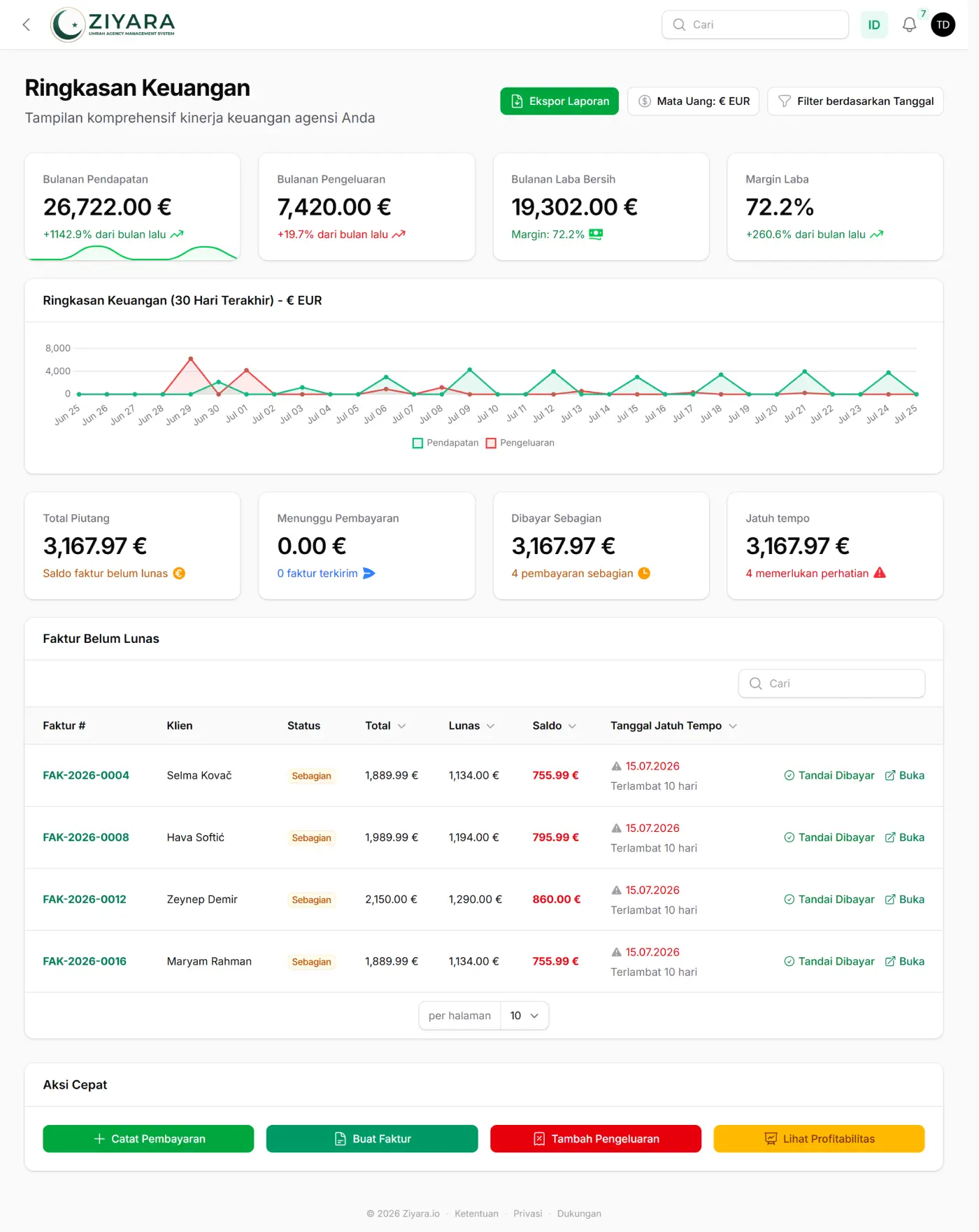
Ziyara dibangun untuk pengujian ini: platform B2B bagi travel umroh dan haji — CRM jamaah dengan data paspor terenkripsi, impor Excel, tautan pendaftaran sepuluh bahasa, pembagian kamar Makkah/Madinah otomatis, tata letak standar dan persiapan manifes yang diarahkan ke maskapai, pelacakan cicilan, serta laba per grup. Konfirmasikan templat terbaru kepada maskapai sebelum dikirim.
Setiap paket juga menyertakan aplikasi mobile untuk jamaah — kartu identitas digital dengan check-in QR, pengumuman push, dan tombol SOS yang mengirim lokasi GPS jamaah ke pembimbing Anda.
Paling cocok: travel umroh atau haji operasional yang menjalankan keberangkatan grup dan ingin satu sumber data dari pendaftaran serta dokumen hingga pembayaran, kamar, manifes, dan laba — terutama bila kantor dan jamaah memakai bahasa berbeda.
Tidak cukup sendirian: OTA yang membutuhkan inventori GDS langsung, marketplace vendor, mesin pemesanan konsumen white-label, atau pengiriman langsung ke Nusuk. Ziyara tidak menggantikan atau terhubung langsung ke Nusuk maupun operator Saudi; Ziyara menyiapkan data dan dokumen yang telah disetujui sesuai alur mereka. Bila inventori langsung atau inbox WhatsApp bersama wajib, pertahankan alat khusus atau pilih platform yang bisa mendemonstrasikan koneksi tersebut.
Harga terbuka di halaman harga, dan uji coba 30 hari tanpa kartu kredit — cukup untuk menjalankan seluruh daftar di atas dengan 20 jamaah Anda sendiri sebelum memutuskan.
Rencana migrasi berisiko rendah
- Pilih waktu tenang di antara keberangkatan; jangan pindah sistem pada minggu terakhir sebelum penerbangan.
- Bersihkan satu spreadsheet aktif: hapus duplikat, seragamkan tanggal, dan tentukan catatan yang menjadi acuan.
- Impor satu grup, bukan seluruh riwayat. Jalankan sepuluh pengujian, cocokkan jumlah dan saldo, lalu minta staf yang menyusun kamar dan manifes menyetujui hasilnya.
- Tentukan tanggal peralihan. Setelah itu platform baru menjadi sumber utama dan file lama hanya-baca. Impor riwayat setelah alur aktif stabil.
Ekspor kembali grup uji sebelum berkomitmen. Migrasi aman hanya bila masuk dan keluar sama-sama berfungsi.
Pertanyaan yang sering diajukan
Apa software terbaik untuk travel umroh?
Software yang lolos kebutuhan wajib dari daftar sepuluh poin memakai satu grup nyata. Bagi kebanyakan travel: profil, grup, pendaftaran, kamar, manifes, pembayaran, laba, keamanan, ekspor yang berguna, dan jalur migrasi. Uji dengan jamaah sendiri.
Adakah software travel yang dibuat khusus untuk grup umroh dan haji?
Ada. Ini kategori kecil tersendiri: software grup yang disusun di sekitar keberangkatan, dengan pembagian kamar satu jenis kelamin di hotel Makkah dan Madinah, data paspor dan visa, manifes penerbangan, dan cicilan per jamaah. Software travel umum dan CRM travel dibangun di sekitar satu pelanggan dan satu pemesanan; perbandingan keduanya menunjukkan di mana masing-masing cocok.
Berapa biaya software travel umroh?
Tidak ada satu harga universal yang berguna: vendor menagih per travel, pengguna, jamaah, pemesanan, atau cabang; portal khusus menambah biaya pembangunan dan pemeliharaan. Bandingkan total tahunan untuk skala Anda, termasuk onboarding, komunikasi, pengguna tambahan, dan pekerjaan yang masih manual.
Apakah ada software untuk grup haji juga?
Ada. Daftar jamaah, kamar, dokumen, pembayaran, dan manifes berjalan dengan cara yang sama untuk haji; kuota, izin, dan logistik Masyair ditangani lewat kanal resmi haji. Panduan manajemen grup haji kami menjelaskan bagaimana keduanya saling melengkapi.
Bisakah mencoba software umroh sebelum membeli?
Cari uji coba gratis yang cukup lama untuk menyiapkan grup sungguhan — setidaknya beberapa minggu — dan tidak meminta kartu kredit, agar daftar penilaian di atas bisa Anda jalankan dengan data sendiri.
Panduan ini ditulis dan diterjemahkan dengan bantuan alat kecerdasan buatan (AI). Jika Anda menemukan kesalahan pada isi atau terjemahan, kirim email ke info@ziyara.io


